Beyond the Surface: Essential Facade Maintenance Tips to Protect Your Facility
Maintaining the exterior of commercial and industrial buildings is a crucial, often overlooked, aspect of property management that directly impacts both long-term asset value and operational costs. A well-executed facade maintenance schedule ensures the structure remains safe and aesthetically appealing.
Given the varying compositions of building materials—from traditional brick and durable stone to specialized terracotta—a tailored approach is essential. In this blog, we’ll discuss specific facade maintenance tips for each material, so you know how to prevent minor aesthetic defects from escalating into costly structural failures.
Brick Exterior Maintenance Tips
While durable, the brick exteriors of commercial and industrial buildings require diligent attention to maintain their structural integrity and professional appearance. Implementing specific facade maintenance tips for brick structures, focusing on mortar health and proper drainage, is essential for ensuring longevity. By following these brick exterior maintenance tips, property owners can proactively manage issues and secure the building for decades to come.
Brick Facade Inspections
It’s recommended to perform annual or semi-annual visual facade inspections of the entire building exterior, ideally scheduling them after harsh weather seasons, such as winter, when damage is most likely to surface.
During these checks, closely look for early signs of distress, including:
- Cracks, particularly stair-step patterns in the mortar.
- Spalling, where the surface is flaking or peeling off..
- Bulging, or any loose units.
Furthermore, pay specific attention to vulnerable areas prone to water intrusion, such as parapet walls, chimneys, and the areas around windows and doors. To ensure proper drainage away from the facade, check and clear all gutters, downspouts, scuppers, and weep holes regularly, especially before the start of wet seasons.
Brick Facade Cleaning
To maintain both the appearance and longevity of the exterior, brick facade cleaning at least once a year, or more frequently in environments prone to heavy pollution or salt exposure (like coastal areas).
Start with the least aggressive cleaning method possible, like a gentle wash using low-pressure water and a pH-neutral, non-acidic detergent. It’s vital to avoid high-pressure washing, especially on older or historic brick, as the force can easily damage the mortar joints and strip away the brick’s protective layer, leaving the material highly vulnerable to weathering and premature deterioration.
Finally, since vegetation can trap moisture against the surface, and roots can damage mortar joints, it’s important to trim back any vines, trees, or bushes that are touching or growing near the brick.
Brick Facade Repairs
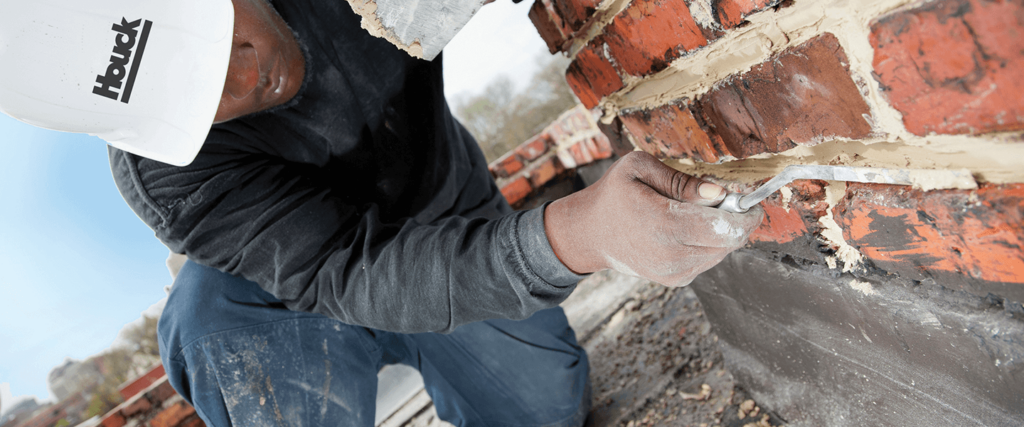
It’s important to promptly replace cracked or spalled bricks. You’ll want to schedule brick facade repairs when mortar joints erode (becoming recessed or crumbly). When using new mortar, ensure that it matches the original in strength, porosity, and composition. If the new mortar is harder than the brick, it will cause the brick itself to crack and spall.
Furthermore, deteriorated sealants are a major source of water and air leakage, which can lead to more expensive facade repairs. Therefore, you should routinely inspect and replace deteriorating or cracked caulking and sealants around windows, doors, and expansion joints.
Stone Exterior Maintenance Tips
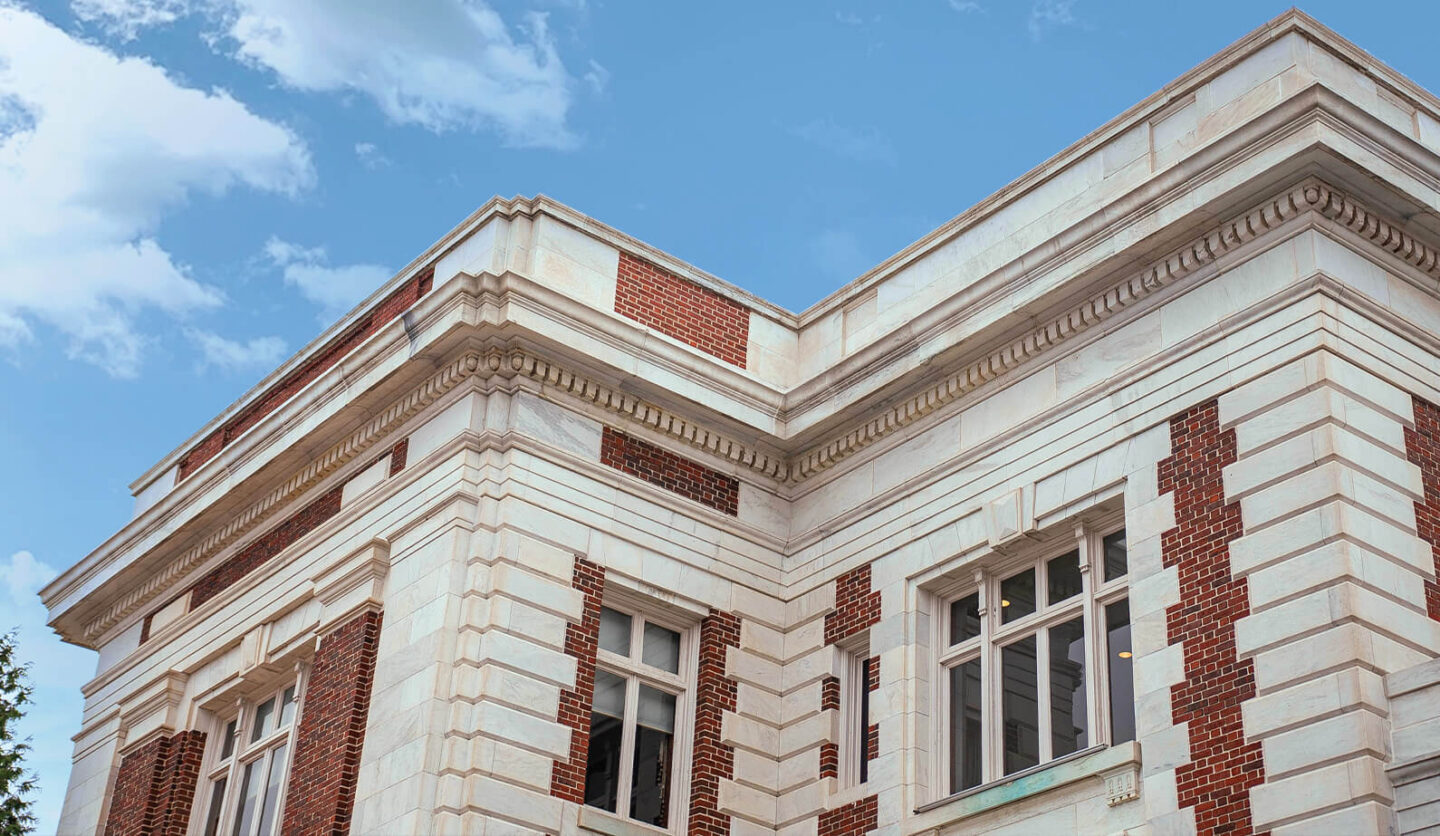
Stone facades lend commercial and industrial buildings an aesthetic of permanence and strength, but they are susceptible to damage from water and incompatible repair materials. Unlike brick, stone types—such as granite, limestone, and sandstone—each require different approaches to their care. Below, we’ve broken down the key stone facade maintenance tips you can follow to preserve both the structural integrity and the original beauty of the masonry.
Stone Facade Inspections
Regular, detailed facade inspections are the key to catching issues before they become structural failures. Some of the most common issues include:
- Spalling or flaking, which is surface deterioration often triggered by the freeze-thaw cycle of water absorbed into the stone’s pores.
- Cracking or fracturing, particularly around metal anchors, control joints, or areas where the stone is restrained, indicates stress or movement.
- Efflorescence, which signals water penetration and migration through the masonry.
Other visual cues include various forms of staining, such as biological growth like algae or moss, or metal stains like rust leaching from internal anchors or lintels.
Stone Facade Cleaning
While the type of stone will determine the proper facade cleaning method, it’s always important to test your solution on a small, inconspicuous area to ensure it doesn’t cause discoloration, erosion, or damage before treating the entire facade.
As we mentioned before, for stone exteriors, facade maintenance tips will vary depending on the type of stone you’re cleaning. If you’re not sure where to start, try following these guidelines:
For soft and porous stone (like limestone or sandstone):
- Use pH-neutral or alkaline cleaners.
- Use gentle methods like low-pressure water misting or steam cleaning.
- Avoid acidic cleaners (these will etch and dissolve the stone).
- Avoid high-pressure washing (will erode the soft stone surface and mortar joints).
For hard and nonporous stone (such as granite or quartzite):
- Can tolerate higher water pressure (up to 400 psi).
- Can handle mild, specialized acidic or alkaline cleaners for tough stains (like rust).
- Avoid overly abrasive cleaning methods, as this can still damage the polished finish.
Stone Facade Repairs
As we mentioned before, some of the most common building facade repairs and maintenance include mortar and joints. For stone repairs, it’s important to use a compatible mortar that is softer than the surrounding stone. Similar to brick exteriors, if the mortar is too hard, it will cause the softer stone to crack when the wall moves.
For minor damage (spalls or chips), a professional may use a compatible repair composite or patching mortar that visually matches the stone. However, for severely damaged or structurally compromised units, the stone block must be replaced entirely with a new stone that matches the original in dimension, color, texture, and physical properties (porosity and strength).
Around windows, doors, and control joints, ensure all perimeter sealants and caulking are intact and regularly replaced (typically every 5-10 years) to prevent water intrusion.

Terracotta Exterior Maintenance Tips
Terracotta facades, often featuring intricate designs and glazes, present unique maintenance challenges for commercial and industrial buildings. A specialized and proactive approach is essential for long-term preservation, and implementing careful facade maintenance is non-negotiable. By following these terracotta exterior maintenance tips, you can safeguard these distinct and aesthetically valuable building components.
Terracotta Facade Inspection
Terracotta requires specialized facade inspections to detect internal structural problems. One method, known as sounding, is used to indicate a void, crack, or detachment of the unit from its backing, often due to corroding anchors. This causes the internal steel to expand and crack the brittle clay.
It’s also important to look closely for crazing (hairline cracks in the glaze) and spalling (flaking of the surface or glaze). While slight crazing is normal and rarely structural, deep cracks allow water to penetrate the porous clay body.
Additionally, the presence of rust stains or cracks originating near joints or the edges of the unit usually indicates corrosion of the embedded steel anchors or lintels, which can lead to structural failure. To identify and eliminate the source of water penetration, check all roof flashings, parapet caps, gutters, and downspouts.
Terracotta Facade Cleaning
Terracotta, especially glazed terracotta, is often described as “self-cleaning” by rain. Therefore, routine facade cleaning usually requires only low-pressure water and a neutral pH detergent or soap with a soft-bristle brush (nylon or natural) or sponge.
It’s crucial to avoid using abrasive methods like sandblasting or metal brushes, which can destroy the protective glaze or layer, leaving the porous clay body exposed and vulnerable to water absorption and decay. Strong acidic or alkaline cleaners should also be avoided as they can damage the glaze, erode mortar joints, and mobilize salts that lead to efflorescence.
Terracotta Facade Repairs
Terracotta facade repairs must address both the aesthetic unit and the underlying structural support system. For minor spalls or damage, a specialized cementitious composite repair mortar can be used. This material must be chosen carefully to match the porosity and strength of the terracotta. Patches should be anchored with supplemental anchors and sealed with a color-matched glaze or coating only on the repair area, not the entire unit.
Ready to secure your facility’s facade?